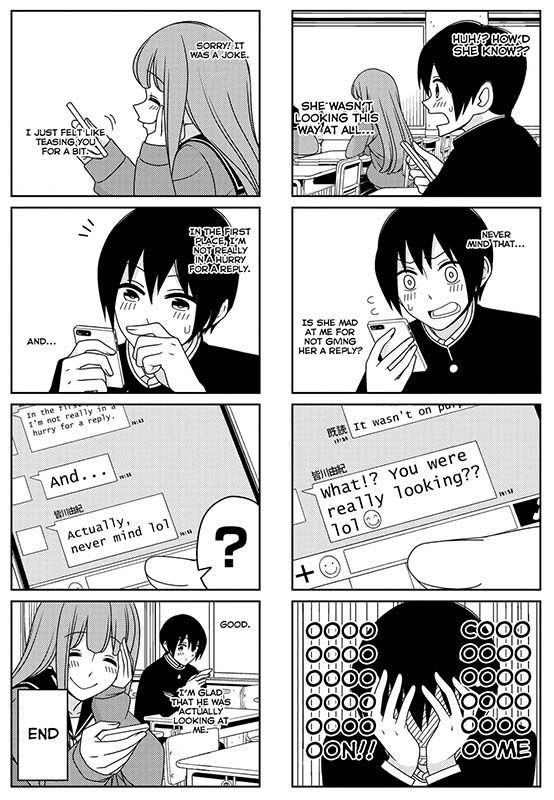
4-Koma (a.k.a. Yonkoma manga) features four panels, follows a specific pattern where every four panels lead up to a punchline. These are read up-down instead of traditional right-left. The right column is always the starting column. Example: Tsurezure Children
Tsurezure Children ch. 20
#Adaptation
Not original content and was addapted from other sources (light novel, anime, picture book etc.). Example: Josee, the Tiger and the Fish which was a Light Novel adapatation.
#Doujinshi
Basically, it means indie works. If the mangaka publishes the manga on their own, then it counts as a doujinshi. It can be derivative work from a licensed franchise too. Also, it doesn't necessarily mean NSFW content.
#Mangaka
Mangaka means the artist of the manga. Mangaka can also be the story writer. Generally, mangaka does everything by himself, but sometimes he may employ assistants to speed up the work and cope with the weekly release schedule.
#Long strip
It's newer type of comics format. Long strip comics are made for smartphone readers. The flow of the panels is up-down instead of traditional right-left. The panels are scrollable vertically so that it is easier to read in smartphone. As a result you have to follow different rules than the traditional manga format. This format is widely used in the manhwa and manhua industries.
#Omake
A bonus/extra chapter which doesn't really affect the main story. Generally gives artworks, character backgrounds, mangaka notes or an extra story.
#One-Shot
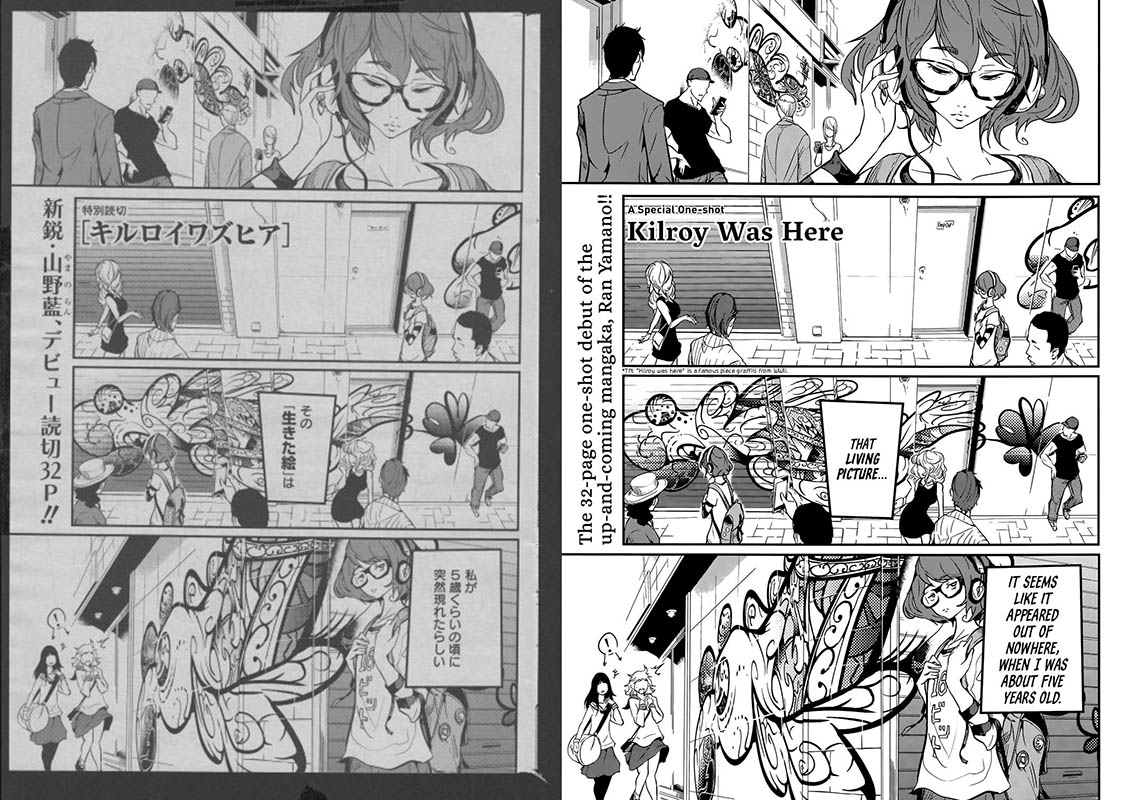
A manga that's been published at once. The length of the story depends on the mangaka. Also, it can be serialized later. Example: Kimi no Kaketeru Tokomo Suki
#Raw
The term 'RAW' refers to manga (Japan), manhwa (Korea), or manhua (China) that has not been modified in any way from its original form.
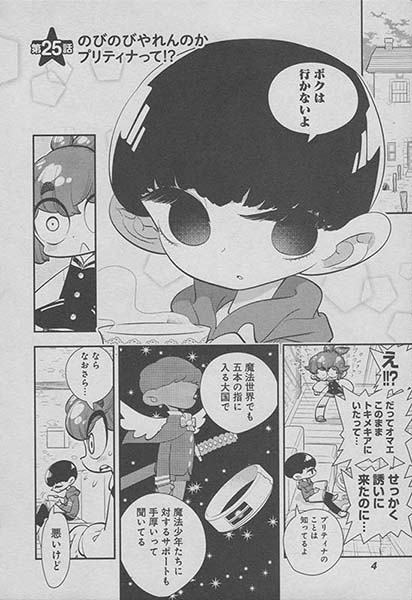
We are Magical Boys
#Sound Effects
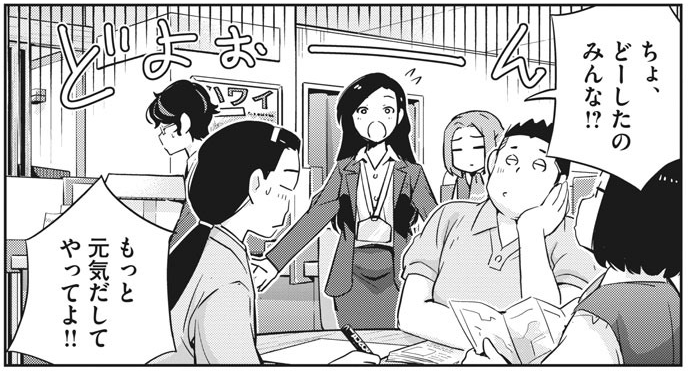
Sound effects in manga visualizes the characters physical or mental state, environment of the scenario, motions or just sounds(obviously).
365 Days To The Wedding; The sfx here is どよおーん” (“Doyoooon”) which means “depressed atmosphere”
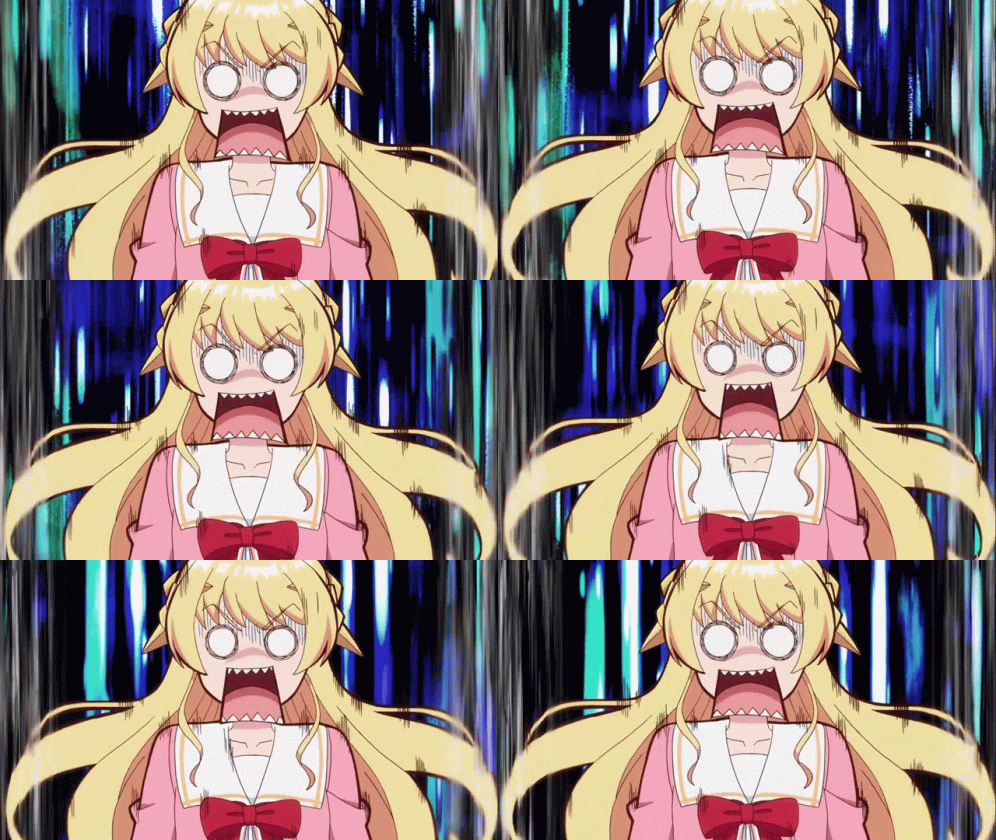
In the sfx image you can see the parallel lines at the tops. These are symbols; works like sfx. These symbols may be used with or without sfx. They can have multiple meaning depending on the context. Like in the next image, it means shock.
Life With an Ordinary Guy Who Reincarnated Into a Total Fantasy Knockout ep. 5
#Splash Page
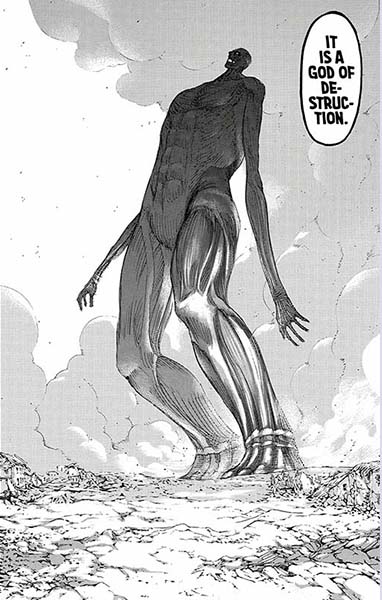
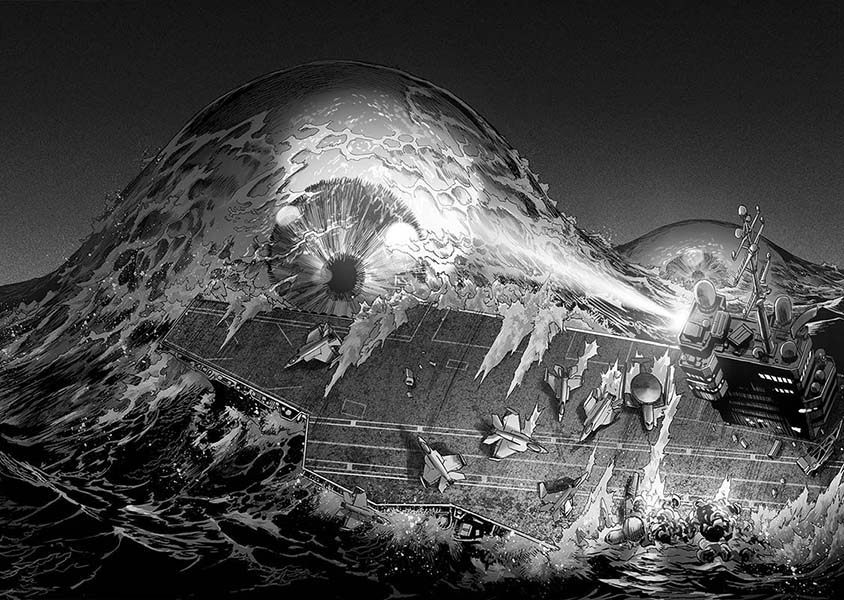
A splash page is a single panel that covers the entire page (or two) and is typically reserved for depicting an action-packed or dramatic scene.
Attack on Titan ch. 95 (single page)
One Punch-Man ch. 155 (two page)
#Tankoubon
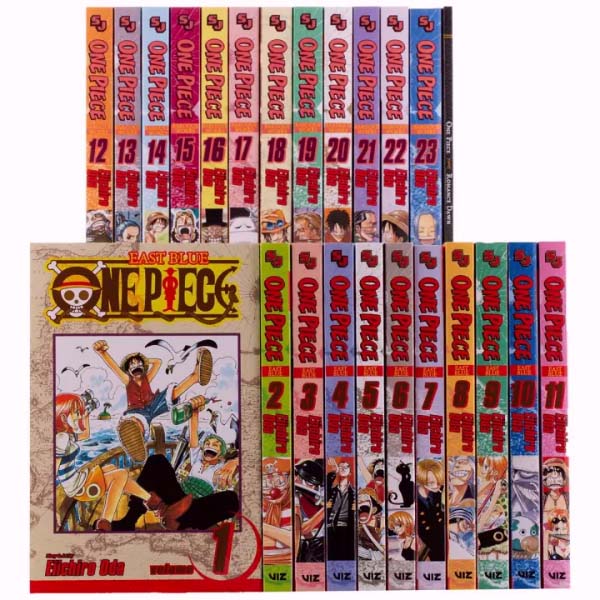
Tankoubon means the volume release. Many manga are initially published in magazines such as Weekly Shonen Jump. If a manga becomes very popular, it can receive a volume release a.k.a. Tankoubon. These volumes often include redrawn content, extra chapters, and notes from the mangaka. Sometimes, Tankoubon collections can feature various works by the mangaka, similar to an anthology.
Webtoon in general indicates Korean long strip comics. They are primarily made smartphone but sometimes they publish the physical version too. Example: Solo Leveling
#Scanlation
#Scanlator
A group that fan translate a manga/manhwa/manhua. The group takes the raw file and translate the whole manga (including dialogue, sfx & other forms of text). Also, sometimes the wordplays & cultural references provided in that chapter are explained in the credit section.
#Cleaner (CL)
Cleaner takes the raw file, fixes any faults (such as artifacts due to scanning, color shifts, tilts, etc.), and cleans all of the original text including SFX, if necessary. But these days, this can be only removing texts since digital raw is widely available.
#Redrawer (RD)
Redrawer redraws all the erased parts by the cleaner and makes them as smooth as possible. They patch everything that was affected due to scanning or other issues. Nowadays, cleaning and redrawing are often done by a single person since these two tasks are closely related.
CL & RD by Raj (Manga: The Fragrant Flower Blooms With Dignity)
#Translator (TL)
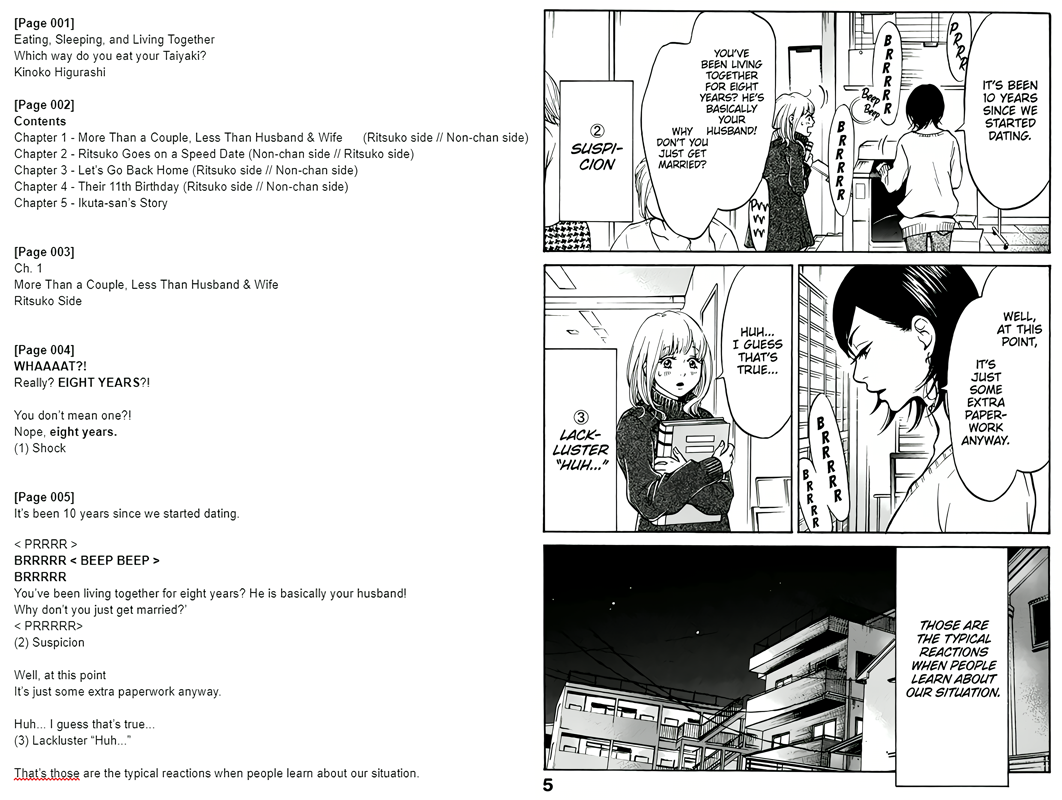
The translator translates all the text in the manga, including dialogues, sound effects, and other texts in the panels. They also provide explanations for all the jokes, cultural references, or wordplays.
TL script of Living, Eating, and Sleeping Together ch. 1 (Page 1-5) (Helvetica Scans)
#Typesetter (TS)
Typesetter takes the translated script from the translator and typeset it on the panel with appropriate font, formatting & sfx drawing. Sometimes TS can do both translation and typesetting.
#Proof reader (PR)
PR reviews all translated text to correct any typos, awkward translations, or grammar issues. It is essential that PR is fluent in the translation language. The job of PR may become unnecessary if the TL is highly experienced, as QC could potentially take on the responsibilities.
#Quality checker (QC)
Quality checker oversees all processes, including checking the translated manga for typos, grammar errors, translation issues, and redrawing problems. However, whether or not this role exists depends on the project or group's working strategy.